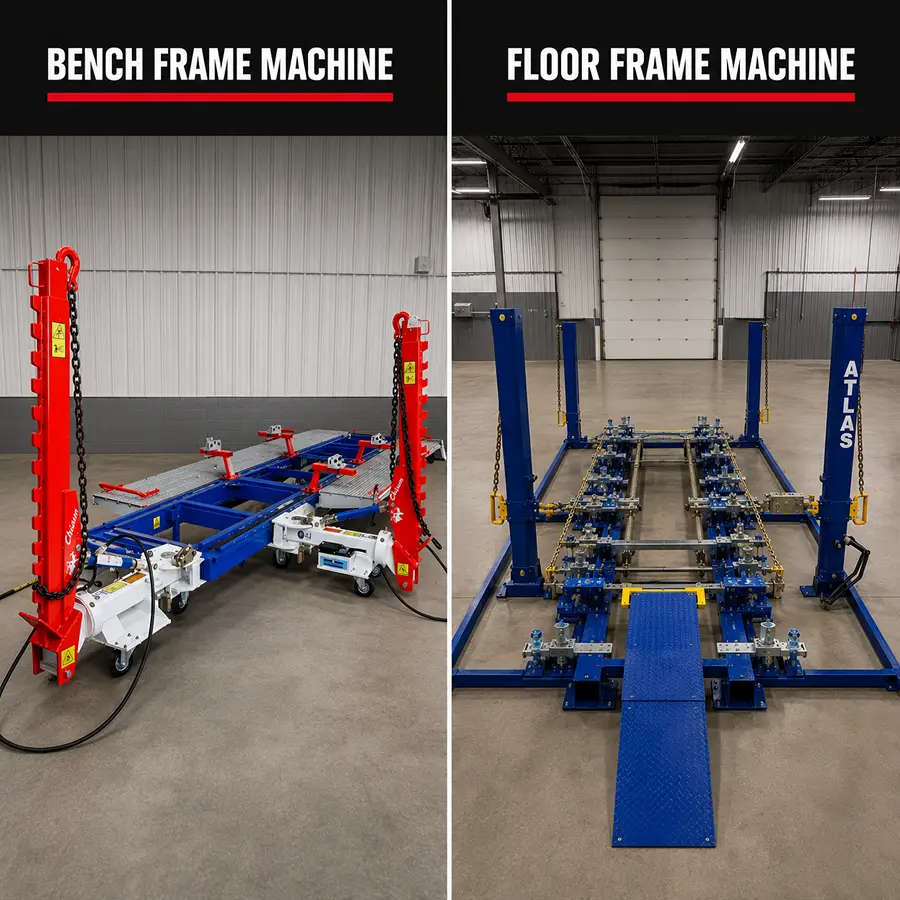
A bench frame machine holds your car up on a raised platform while your team works on it. A floor frame machine anchors the car down at ground level using anchor points built into your shop floor. Bench machines are usually faster to set up and easier on your techs’ backs. Floor machines often cost less to install and can handle very heavy pulls. The right choice comes down to your shop’s budget, your space, and the type of collision repair jobs you handle most, and we can help you figure out which one fits your shop.
What Is a Bench Frame Machine?
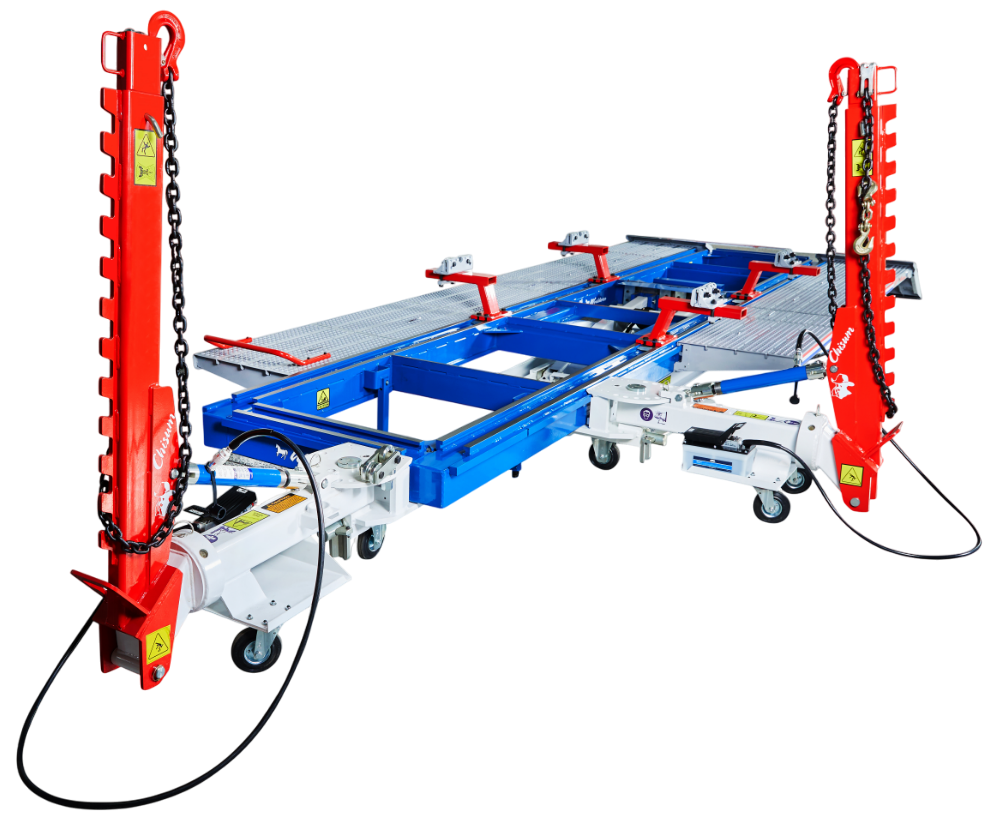
A bench frame machine is a raised metal bench that a damaged vehicle drives up onto for structural repairs. Your tech anchors the car to the bench, then uses hydraulic towers and pulling chains to straighten bent frames and unibodies. Because the car sits up high, your team does not have to crawl underneath it to hook up clamps and chains. Many bench systems, like the Chisum Workhorse, include a precision-milled surface and full frame anchoring so every pull stays accurate.
- A raised, drive-on platform that saves your team’s back and knees
- Full frame and unibody anchoring built into one system
- Fast setup so you can move between jobs quicker
- Electric or air hydraulic lifts for smooth height changes
What Is a Floor Frame Machine?
A floor frame machine keeps the vehicle down at ground level and anchors it to the shop floor with built-in anchor pots or rails. Your tech still uses hydraulic pulling towers and chains, but the car does not lift up off the ground. Floor systems are often less expensive up front since your shop does not need a raised bench structure. They also tend to work well for shops that repair a lot of heavy trucks or fleet vehicles, since the car’s weight stays low and stable during a pull.
Bench Frame Machine vs. Floor Frame Machine: Key Differences
When you compare a bench frame machine to a floor frame machine, a few differences stand out:
- Working height: bench machines lift the car up, floor machines keep it at ground level
- Setup speed: bench machines usually let your team move between jobs faster
- Upfront cost: floor machines are often cheaper to buy and install
- Comfort: bench machines are easier on your techs’ bodies over a full shift
- Space needs: floor machines can work in a smaller footprint since there is no raised platform
Which One Is Right for Your Shop?
If your shop handles a high volume of unibody repairs and wants faster cycle times, a bench frame machine like the Chisum Workhorse is usually the better fit. If your shop works on heavy trucks, has a tighter budget, or wants a simpler setup, a floor-style pulling system, such as the Chisum Bronco or Bronco XL, may make more sense. Some multi-bay shops even run both, using a bench machine for daily unibody work and a floor-style system for bigger structural jobs. The best answer depends on the vehicles you see most, the space in your shop, and how your team likes to work.
Making the Right Choice for Your Collision Repair Shop
Choosing between a bench frame machine and a floor frame machine comes down to your shop’s budget, space, and the repairs you do every day. Bench machines offer speed and comfort for your techs, while floor machines offer a lower cost and a smaller footprint. Either way, the equipment you pick should help you meet OEM repair standards and keep cars moving through your shop. Our team at Lombard Equipment has spent more than 30 years helping over 1,000 collision repair shops across Massachusetts, Virginia, and Florida choose the right collision repair equipment for their bay. Contact our sales team today or call 800-422-7855 to talk through your shop’s needs, and ask about our financing options too.