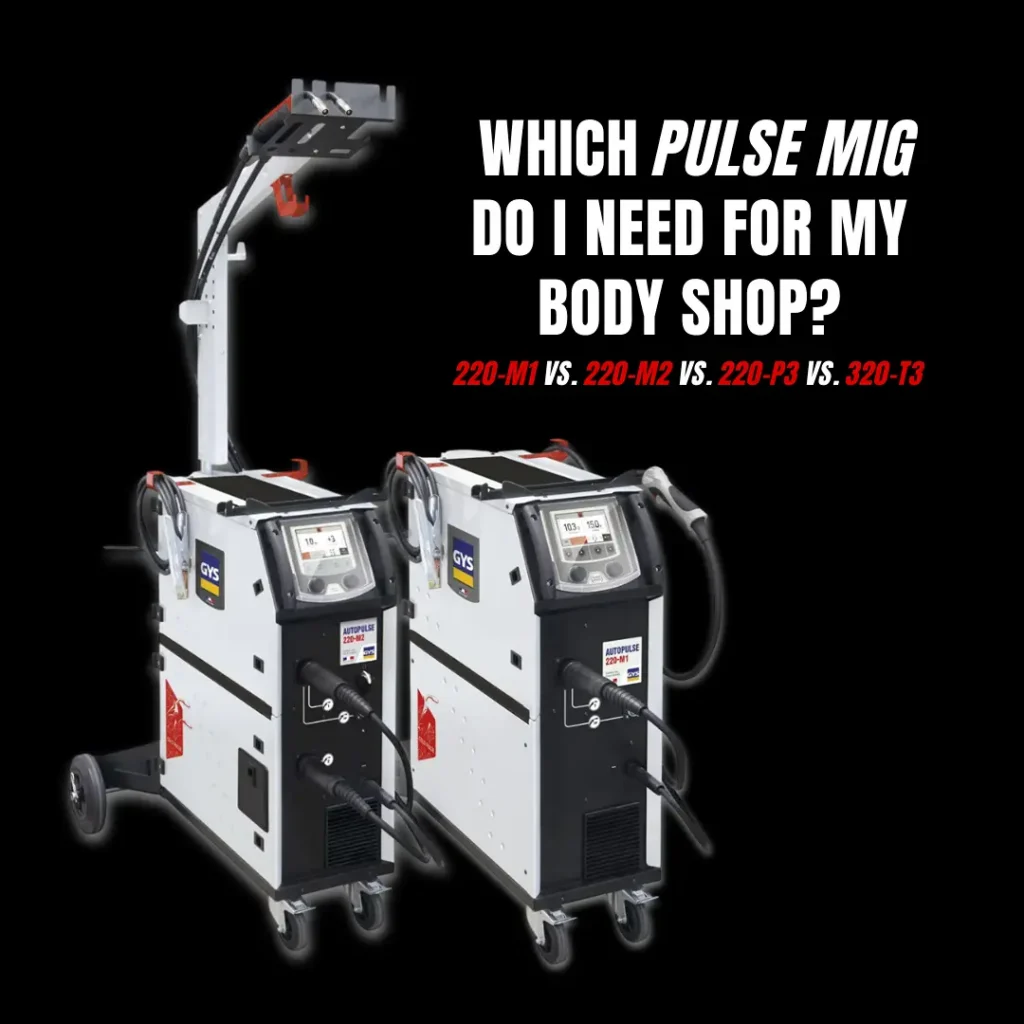
The right GYS Autopulse for your shop comes down to one question: how many torches do you need ready at the same time? The 220-M1 has one wire feeder. The 220-M2 has two. The 220-P3 and the 320-T3 each have three. That single choice matters more than any other number on the spec sheet, so this GYS Autopulse comparison starts there.
What a Wire Feeder Actually Does
Each wire feeder holds one spool of wire and runs one torch. A machine with three feeders keeps steel, aluminum, and silicon bronze loaded all at once. When the job changes, you set down one torch and pick up another. With one feeder, you have to swap the spool, change the liner, and fit a new torch first.
That swap is the whole story. We install GYS welding equipment in shops up and down the East Coast, and feeder count is the first thing techs ask about. It is also the thing shops regret getting wrong.
The Four Autopulse Machines, Side by Side
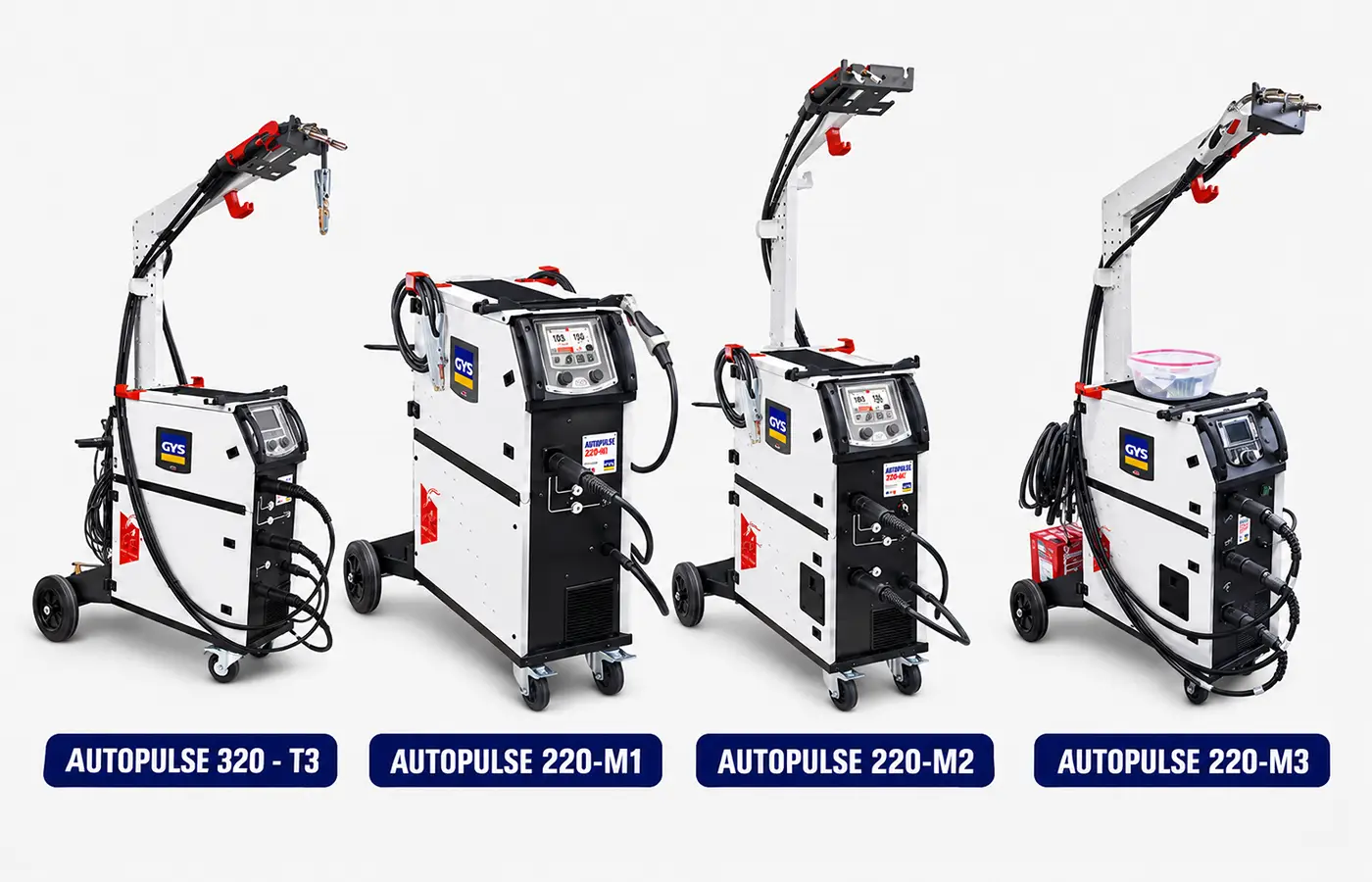
Autopulse 220-M1 — One Feeder
The Autopulse 220-M1 runs on single phase power and has one built-in feeder. It welds steel, aluminum, and silicon bronze, and it holds up to 500 saved weld programs. If your shop welds steel most days and only touches aluminum now and then, this is the right machine.
Autopulse 220-M2 — Two Feeders
The Autopulse 220-M2 adds a second feeder and a second torch. Most shops load steel in one and aluminum in the other. It comes with 68 preset curves for different metals, wire sizes, and gases, so your techs are not guessing at settings.
Autopulse 220-P3 — Three Feeders, Already Loaded
The Autopulse 220-P3 has three feeders and ships with three torches and three spools picked for body work: steel, aluminum, and CuSi silicon bronze. It puts out up to 220 amps on single phase power. Nothing to swap — every common repair metal is loaded and waiting.
Autopulse 320-T3 — Three Feeders, More Power
The Autopulse 320-T3 also has three feeders, but it climbs to 320 amps and needs three phase power. Be honest about that last part. If your building does not have three phase service, this machine is off the table until an electrician says otherwise.
When Switchover Time Starts Costing Real Money
Here is the plain math. Changing the wire, the liner, and the torch takes a few minutes each time. Do it twice a day and you lose a little. Do it six or eight times a day and you are burning real hours every week.
So count your switches, not your specs. A shop that changes metals once or twice a day will be happy on a single feeder. A shop that jumps between steel, aluminum, and brazing all day is already paying for a multi feeder machine — it just does not own one yet.
So Which Autopulse Should You Buy?
Start with your daily job mix, not the spec sheet. Mostly steel with the odd aluminum panel? The 220-M1 is enough machine. Steel and aluminum every day? Step up to the 220-M2. Bouncing between three metals all day? The 220-P3, or the 320-T3 if you have three phase power.
At Lombard Equipment we have sold and serviced collision repair welding systems for over 30 years, and we would rather put you on the right machine than the biggest one. Our team in Massachusetts can bring a machine to your shop and let your techs run beads on your own panels. Contact our sales team to set up a demo.