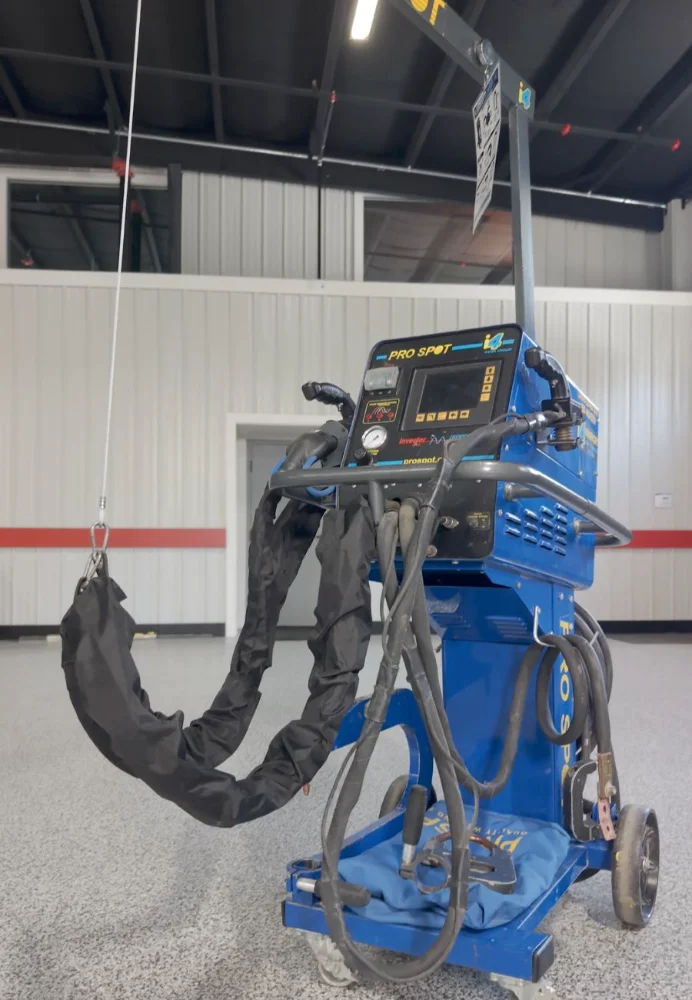
A used Pro Spot welder can still do solid work, but only if you know which model you are buying and you check it closely first. The i4, i4s, and i5 are resistance spot welders, which join panels by squeezing them and passing current through them. The SP5 is a MIG welder, which feeds wire into the joint to make a weld, so it does a different job. At Lombard Equipment, we no longer sell new Pro Spot machines, but we do sell refurbished Pro Spot units when they come in.
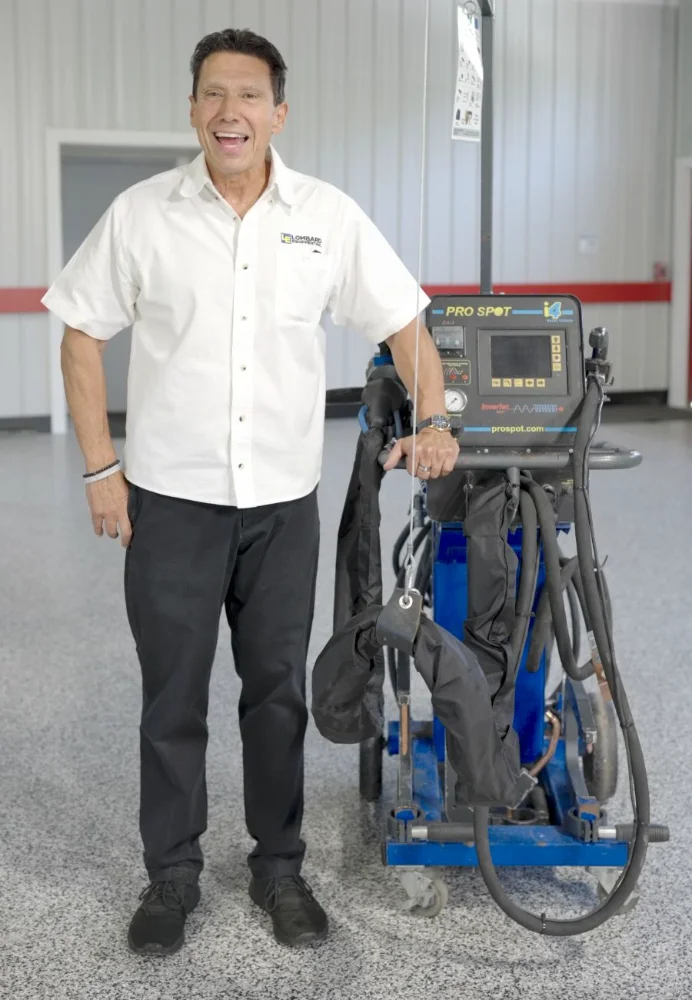
Pro Spot Welder Models: i4, i4s, i5 and SP5
Pro Spot, often written ProSpot, has made several welders, and the names look a lot alike on a sales listing. Here is what each one is, in plain words. The numbers below come from Pro Spot and its dealers, so check them against the machine in front of you.
- i4: An inverter spot welder. An inverter turns shop power into a steady, controlled weld current. It is rated up to 12,500 amps and runs on three-phase power, the heavier electric service many shops use for big machines.
- i4s: The model that came after the i4. It added a smart auto mode that senses the metal and its thickness, then sets the weld power for you, plus WiFi for updates.
- i5: A step up in power, rated up to 14,500 amps with up to about 1,243 pounds of clamp force. Its auto mode sets the current, weld time, and squeeze pressure.
- SP5: Not a spot welder at all. Pro Spot calls it the SP-5 Smart Pulse MIG. Pulse means the machine pulses the current to control heat, which helps on thin steel and aluminum. It is set up to weld steel, aluminum, and silicon bronze.
Pro Spot has also released newer models, such as the i5s. To know exactly what you are getting, read the data plate, the metal tag that lists the model, serial number, and power needs. For example, this refurbished Pro Spot i4 was listed as the 480 volt version, so a shop with only 240 volt power could not just plug it in.
What to Check on a Used Pro Spot Before You Buy
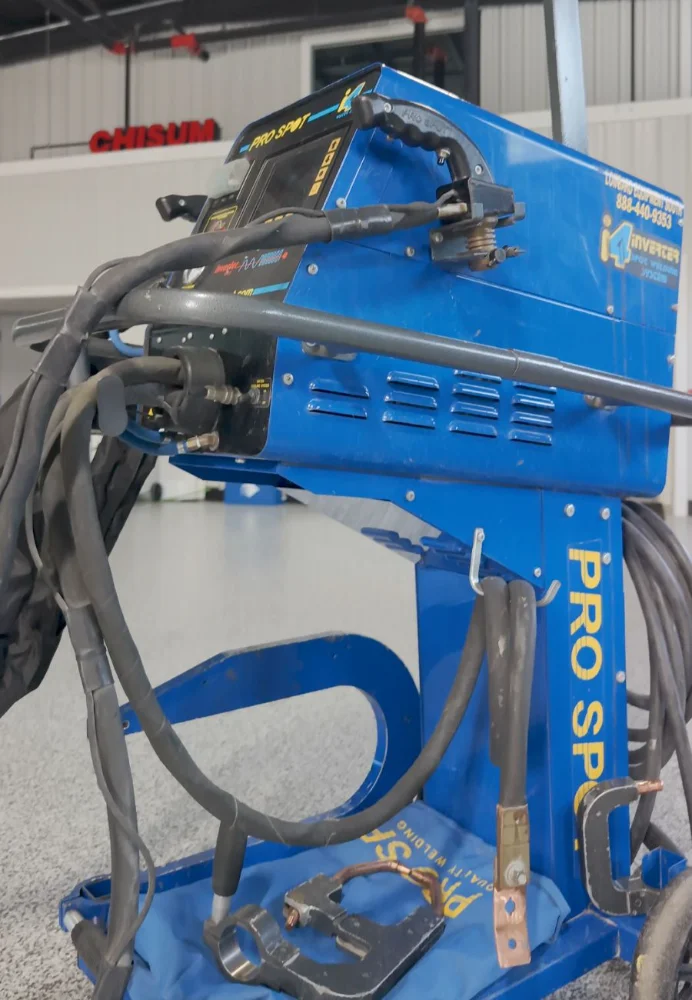
A spot welder works hard, and some parts wear faster than others. In our service work, the problems that come up most are water leaks in the gun, worn flexible hoses, and tired o-rings, which are the rubber rings that seal the water lines. Go through this list on any used unit, from any seller.
- Gun and cooling: Look for drips, wet spots, or crust around the gun and its fittings. Check the coolant level and ask when it was last changed.
- Cables and hoses: Look for cracks, cuts, kinks, and stiff spots.
- Arms and caps: Make sure the arms are straight and come with the machine. Caps are the copper tips that touch the metal, and they should line up face to face.
- Software: Ask what version is loaded and whether it can still be updated.
- Power: Match the voltage and phase on the data plate to your shop.
- Parts support: Call Pro Spot or a dealer with the serial number and ask about parts for that model.
Last, ask to see it weld. Make test welds on scrap metal that matches the car, then pull them apart to check the weld spot, which is called a destructive test. Remember that the vehicle maker’s repair procedure decides the repair method, the welder settings, and sometimes which welders are approved. To see how this ties to shop certification, read about OEM certification equipment requirements.
Buying New? Consider GYS
If no refurbished Pro Spot fits your shop, or you would rather start with a new machine, GYS is what we recommend. GYS is a French company that makes spot welders, riveters, and dent pullers for body shops. The GYS Inverter PTI-G delivers up to 14,500 amps and up to 20 spot welds per minute, with 12 arm options.
Not every shop has a lot of floor space. The GYS PTI Master 240V runs on 240 volt power and has a small footprint made for tight shops. If you are still weighing your options, read why choosing the right spot welder matters.
Find the Right Spot Welder for Your Shop
A used Pro Spot welder can serve a shop well when the model fits the work and the machine checks out. Know the model, match the power, and test it before you buy. Contact our sales team to compare a refurbished unit with a new GYS machine, or to ask what refurbished units are available right now.